the fontaine lab of
host-microbe-environment interactions
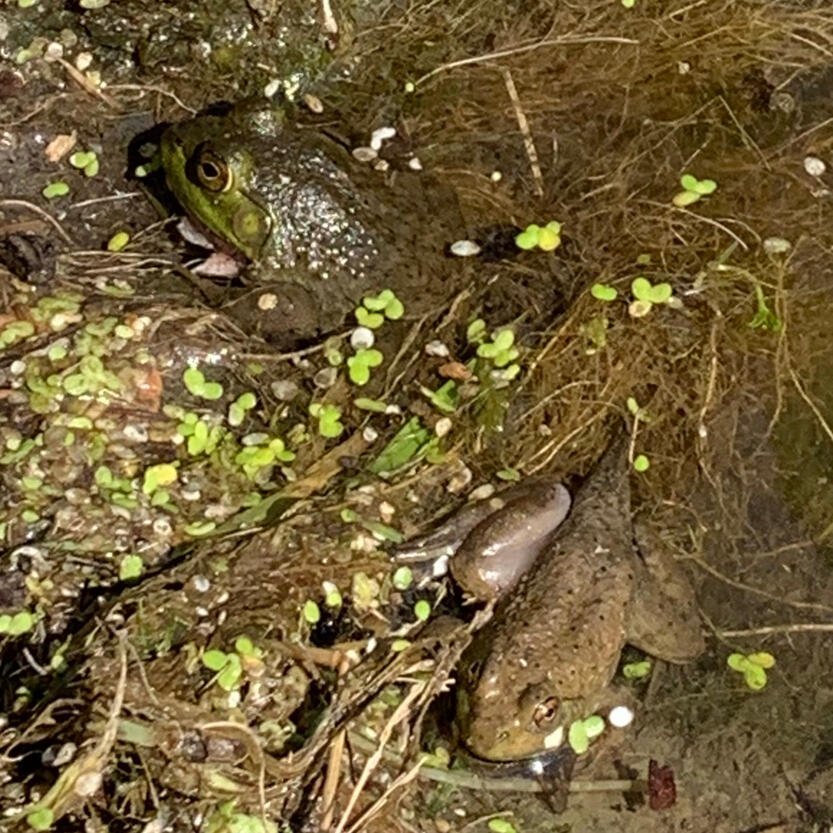
The Fontaine Lab studies the physiology, ecology, and fitness of amphibians and reptiles with a primary focus on how these factors are influenced by host-associated microbial communities. We are especially interested in how host-microbe interactions mediate organismal responses to a rapidly changing world. We use a combination of laboratory, field, and computational approaches to address our questions. The lab is based in the Biology Department at the University of South Dakota.
We are recruiting masters and PhD students to join our lab!
Interested students should contact the PI with a CV and information about their research interests
Click below to learn more about USD's biology programs
Our team
Principle Investigator
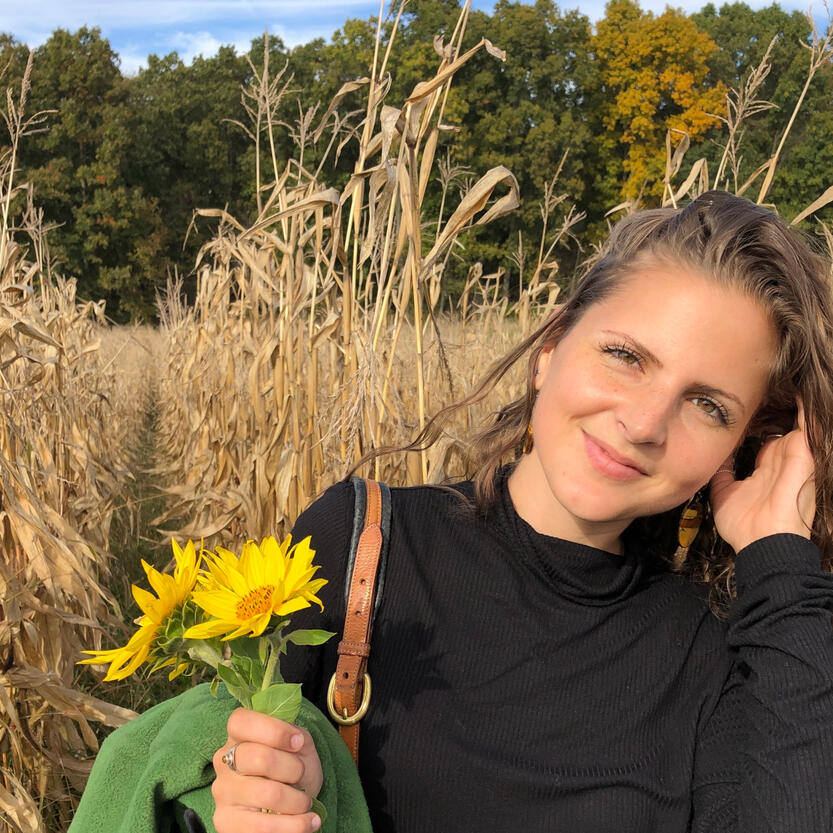
Samantha Fontaine, Ph.D.
[email protected]Sam is originally from Rhode Island, got her B.S. in Biology from SUNY Oneonta in upstate NY, and her PhD from the University of Pittsburgh. For her PhD work, she studied the role of the gut microbiome in thermal tolerance of larval amphibians. In her postdoc, she explored relationships between gut microbes and thermal plasticity in tropical anoles, and developed the first germ-free reptile model in invasive common wall lizards from Cincinnati. She is passionate about animal conservation and the potential to utilize microbiome science to bolster wildlife health. She also enjoys natural history museum collections and has developed methods to study the gut microbiome of fluid-preserved specimens. In her free time she enjoys yoga, knitting and quilting, spending time with her family and pets, and working to restore her new (old) home.
Research
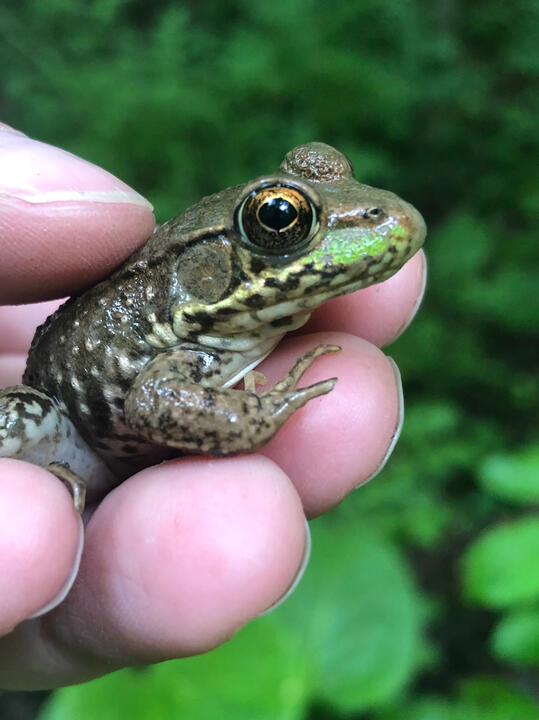
Microbially-mediated host thermal tolerance
We have previously shown that manipulating the tadpole microbiome through environmental water sterilization reduces host thermal tolerance and fitness under heat stress. Our future work will focus on understanding the molecular mechanisms behind these effects, if early-life microbial exposure impacts thermal tolerance in later life stages, and what the fitness implications are for hosts under more natural conditions.
Impacts of microbiome function on range expansion in invasive species
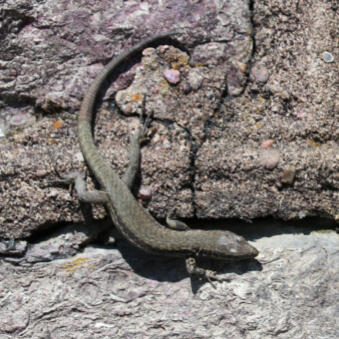
Microbes are often able to perform functions that hosts cannot perform themselves (e.g., production of metabolites or breakdown of complex dietary substrates). These functions may help species rapidly respond to novel environments. We have shown that the gut microbiome of an invasive amphibian is more functionally responsive to changing temperature than a non-invasive relative. We plan to explore these ideas in more detail taking advantage of repeated introductions of wall lizards (Podarcis spp.) in North American cities.
Life history trade-offs induced by microbially-mediated traits
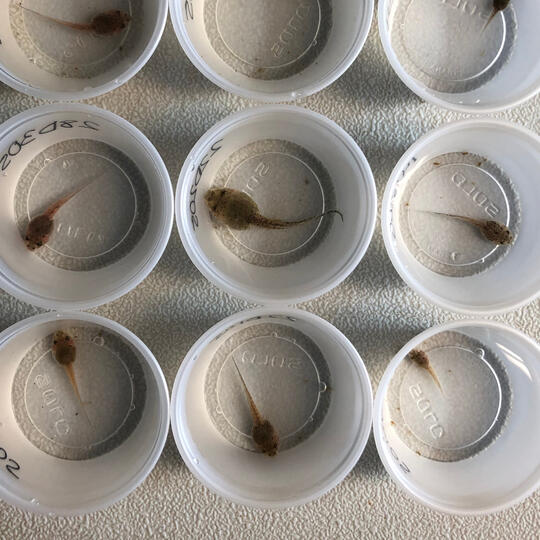
Microbes can provide important benefits for their hosts, such as increased heat tolerance. However, housing complex microbial communities can also come at a cost. For example, we have shown that tadpoles with disrupted microbial communities have larger body sizes and accelerated developmental rates compared to those with more diverse microbiota. These differential effects could result in trade-offs impacting host fitness. We plan to assess these trade-offs using semi-natural mesocosm experiments.
Harnessing the microbiome as probiotics for wildlife health
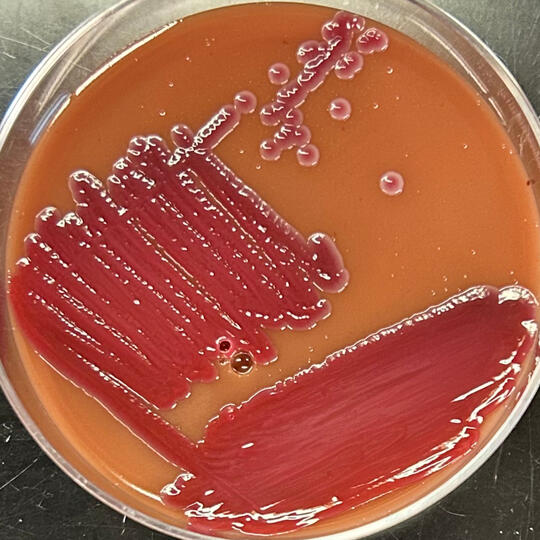
Microbes perform functions that are beneficial to their hosts and can be externally manipulated through microbial culture and inoculation. Therefore, it is possible that probiotic treatments could be developed and applied to conserve wildlife. We are working to develop and implement a framework to identify suitable probiotic treatments that can be used to bolster wildlife stress resilience using amphibians and heat-tolerance-promoting bacteria as a model.
publications
* authors contributed equally
2026
19. Matthews, A.E., Gates, V., Sharma, K., Gallego, S., Desmond, M., Fontaine, S.S., Trevelline, B. and Baiz, M.D. (2026). Hidden palette: Culturing the sauropsid gut microbiome reveals a high prevalence and diversity of bacteria that undergo carotenoid biosynthesis. FEMS Microbiology Ecology, p.fiag100.18. Fontaine, S.S. *, Wuthrich, K.L. *, Alfonso, C., Alujević, K.A., Bakewell, L., Keller, J., López-Tacoaman, Y.F., Ponce-Chilan, N.E., Vivas, A., Williams, C.E., McMillan, W.O., Cox, C.L., & Logan, M.L. Gut microbiome composition and diversity are associated with heat tolerance plasticity in a tropical lizard. Ecological and Evolutionary Physiology. 99 (5). DOI: doi.org/10.1086/74240217. López-Tacoaman, Y. F., Alcivar, M., Alujević, K., Bakewell, L., Curlis, J. D., Gonzalez, A., Gripshover, N. D., Gulati, S., Pirani, R. M., Ratia, N., Romero, D., Wuthrich, K. W., Cox, C.L., Logan, M. L., McMillan, W. O., Fontaine, S. S., & Williams, C. E. Host and environmental drivers of gut microbiome variation in wild Anolis lizards. Molecular Ecology. 35 (9), e70358. DOI: doi.org/10.1111/mec.7035816. Williams, C. E., López-Tacoaman, Y. F., Fontaine, S.S., & Logan, M. L. The lizard microbiome: patterns, drivers, and functional implications. FEMS Microbiology Letters. fnag049. DOI: doi.org/10.1093/femsle/fnag049
2025
15. Fontaine, S.S., & Trevelline, B.K. Transcriptomics at the thermal limits of an urban introduced lizard. Journal of Thermal Biology. 134, 104305. DOI: doi.org/10.1016/j.jtherbio.2025.10430514. Bakewell, L., Alfonso, C., Alujević, K.A., Fontaine, S.S., Keller, J., López-Tacoaman, Y.F., Ponce-Chilan, N.E., Vivas, A., Williams, C.E., Wuthrich, K.L., McMillan, W.O., Logan, M.L., & Cox, C.L. Higher parasite load is associated with lower heat tolerance in a tropical lizard. Journal of Experimental Biology, 228 (18), jeb.250580. DOI: doi.org/10.1242/jeb.25058013. Fontaine, S.S., & Trevelline, B.K. An early-life perspective is needed to explain the impact of gut microbiota on wild vertebrate phenotypes. Journal of Experimental Biology, 228 (14), jeb.250130. DOI: https://doi.org/10.1242/jeb.25013012. Fontaine, S.S., Kennedy-Gold, S.R., Regester, K.J., Sheridan, J.A., & Kohl, K.D. The impact of whole-animal fluid preservation on the observed gut microbiome of vertebrates: implications for the use of museum specimens in microbiome research. Molecular Ecology Resources, 0:e14127. DOI: http://doi.org/10.1111/1755-0998.1412711. Brannelly, L.A., Ohmer, M.E.B., Zimmerman, L., Wantman, T.M., Reuben, P.L, Zegar, J., Fontaine, S.S., Bletz, M.C., LaBumbard, B.C., Venesky, M.D., Cramp, R., Woodhams, D.C., & Richards-Zawacki, C.L. Post metamorphic growth partially compensates for the effects of density and hydroperiod during larval rearing on juvenile frog performance. Ecosphere, 16, e70177. DOI: https://doi.org/10.1002/ecs2.70177
2024
10. Williams, C.E., & Fontaine, S.S.. The microbial dependence continuum: Towards a comparative physiology approach to understand host reliance on microbes. Comparative Physiology and Biochemistry Part A: Molecular & Integrative Physiology, 296, CBA111690. DOI: https://doi.org/10.1016/j.cbpa.2024.111690
2023
9. Fontaine, S.S., & Kohl, K.D. Ectotherm heat tolerance and the microbiome: current understanding, future directions and potential applications. Journal of Experimental Biology, 226 (12), jeb245761. DOI: https://doi.org/10.1242/jeb.2457618. Emerson, K.J., Fontaine, S.S., Kohl, K.D., & Woodley, S.K. Temperature and the microbial environment alter brain morphology in a larval amphibian. Journal of Experimental Biology, jeb245333. DOI: https://doi.org/10.1242/jeb.2453337. Fontaine, S. S., & Kohl, K. D. The microbiome buffers tadpole hosts from heat stress: a hologenomic approach to understand host-microbe interactions under warming. Journal of Experimental Biology, 226 (1), jeb245191. DOI: https://doi.org/10.1242/jeb.245191
2022
6. Fontaine, S. S., Mineo, P. M., & Kohl, K. D. Experimental manipulation of microbiota reduces host thermal tolerance and fitness under heat stress in a vertebrate ectotherm. Nature Ecology & Evolution, 6, 405-417. DOI: https://doi.org/10.1038/s41559-022-01686-2
2021
5. Fontaine, S. S., Mineo, P. M., & Kohl, K. D. Changes in the gut microbial community of the eastern newt (Notophthalmus viridescens) across its three distinct life stages. FEMS Microbiology Ecology, 97 (3), fiab021. DOI: https://doi.org/10.1093/femsec/fiab021
2020
4. Fontaine, S. S., & Kohl, K. D. Optimal integration between host physiology and functions of the gut microbiome. Philosophical Transactions of the Royal Society B, 375 (1808), 20190594. DOI: https://doi.org/10.1098/rstb.2019.05943. Fontaine, S. S., & Kohl, K. D. Gut microbiota of invasive bullfrog tadpoles responds more rapidly to temperature than a noninvasive congener. Molecular Ecology, 29 (13), 2449-2462. DOI: https://doi.org/10.1111/mec.15487
2019
2. Trevelline, B. K.*, Fontaine, S. S. *, Hartup, B. K., & Kohl, K. D. Conservation biology needs a microbial renaissance: a call for the consideration of host-associated microbiota in wildlife management practices. Proceedings of the Royal Society B, 286 (1895), 20182448. DOI: https://doi.org/10.1098/rspb.2018.2448
2018
1. Fontaine, S. S., Novarro, A. J., & Kohl, K. D. Environmental temperature alters the digestive performance and gut microbiota of a terrestrial amphibian. Journal of Experimental Biology, 221 (20), jeb187559. DOI: https://doi.org/10.1242/jeb.187559
lab news
2026
Sam officially joined the Biology Department at the University of South Dakota as an Assistant Professor!
Gallery
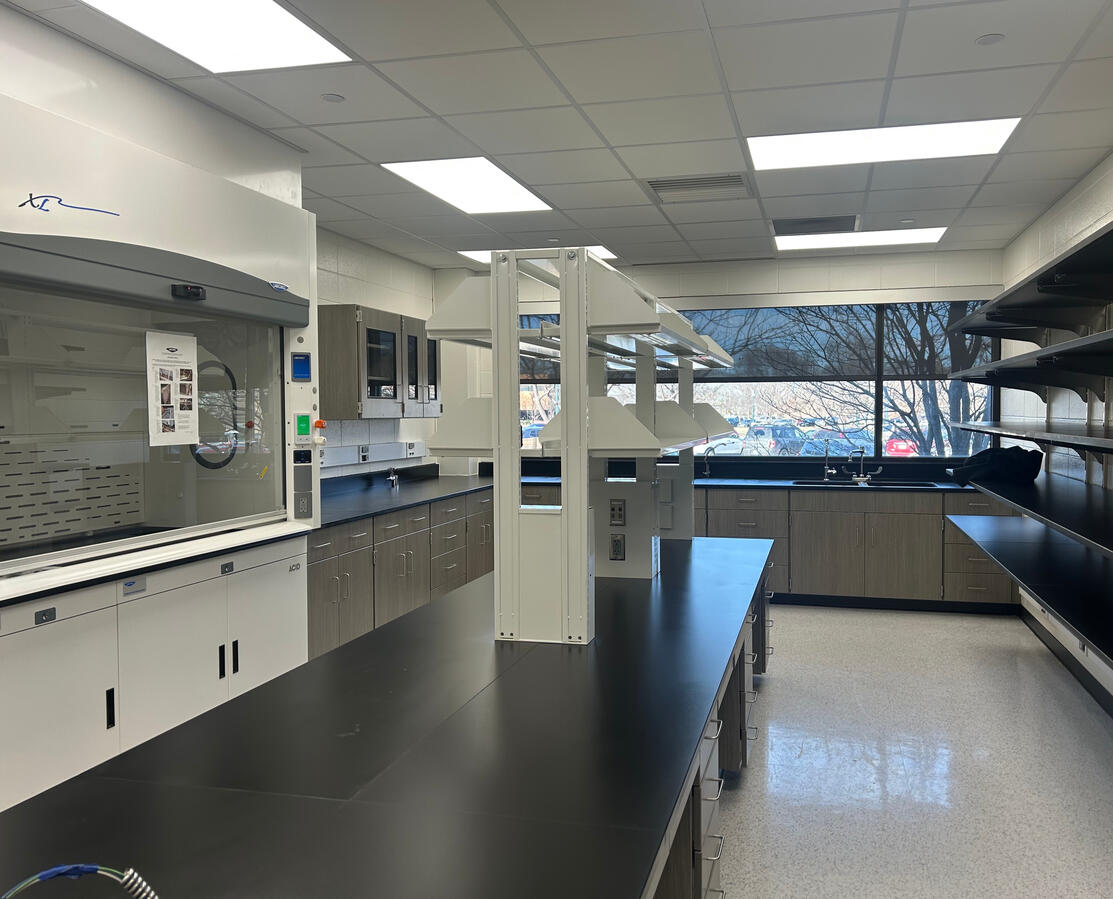
Our new wet lab

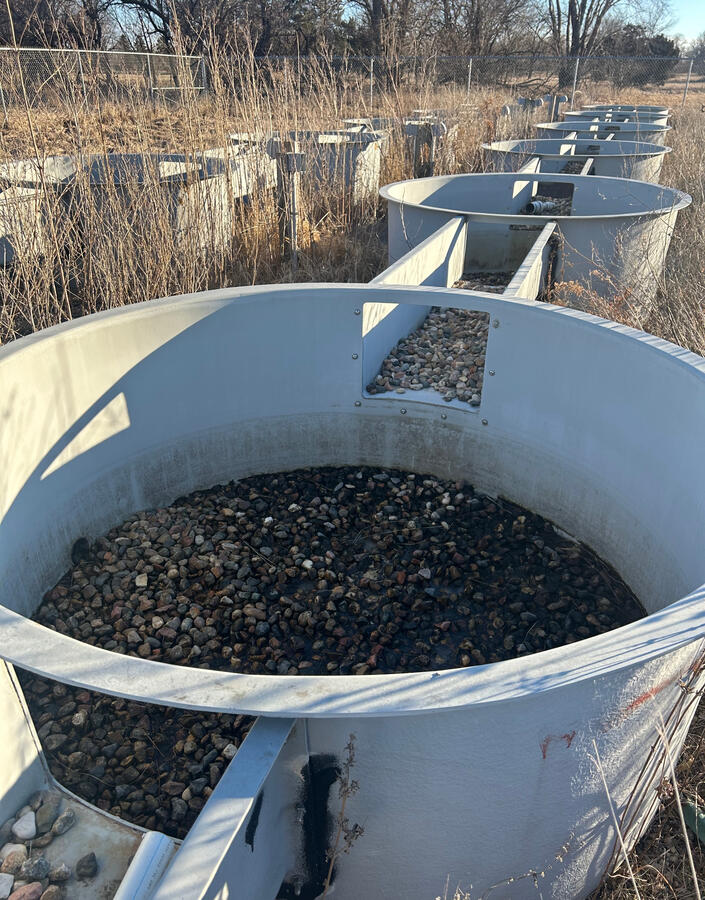
Mesocosms for outdoor experiments
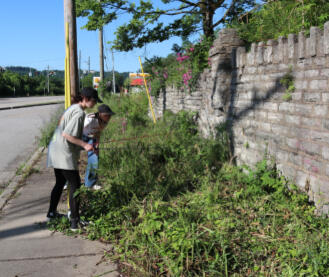
Lasso-ing lizards
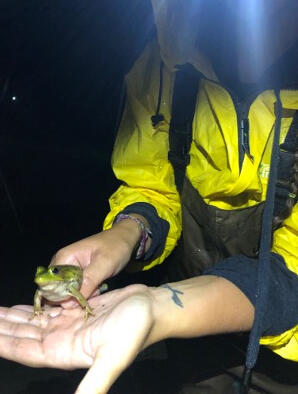
Catching frogs
Contact
Lab: 184A Churchill-Haines
Office: 171E Churchill-Haines
[email protected]